You’re out of free articles.
Log in
To continue reading, log in to your account.
Create a Free Account
To unlock more free articles, please create a free account.
Sign In or Create an Account.
By continuing, you agree to the Terms of Service and acknowledge our Privacy Policy
Welcome to Heatmap
Thank you for registering with Heatmap. Climate change is one of the greatest challenges of our lives, a force reshaping our economy, our politics, and our culture. We hope to be your trusted, friendly, and insightful guide to that transformation. Please enjoy your free articles. You can check your profile here .
subscribe to get Unlimited access
Offer for a Heatmap News Unlimited Access subscription; please note that your subscription will renew automatically unless you cancel prior to renewal. Cancellation takes effect at the end of your current billing period. We will let you know in advance of any price changes. Taxes may apply. Offer terms are subject to change.
Subscribe to get unlimited Access
Hey, you are out of free articles but you are only a few clicks away from full access. Subscribe below and take advantage of our introductory offer.
subscribe to get Unlimited access
Offer for a Heatmap News Unlimited Access subscription; please note that your subscription will renew automatically unless you cancel prior to renewal. Cancellation takes effect at the end of your current billing period. We will let you know in advance of any price changes. Taxes may apply. Offer terms are subject to change.
Create Your Account
Please Enter Your Password
Forgot your password?
Please enter the email address you use for your account so we can send you a link to reset your password:
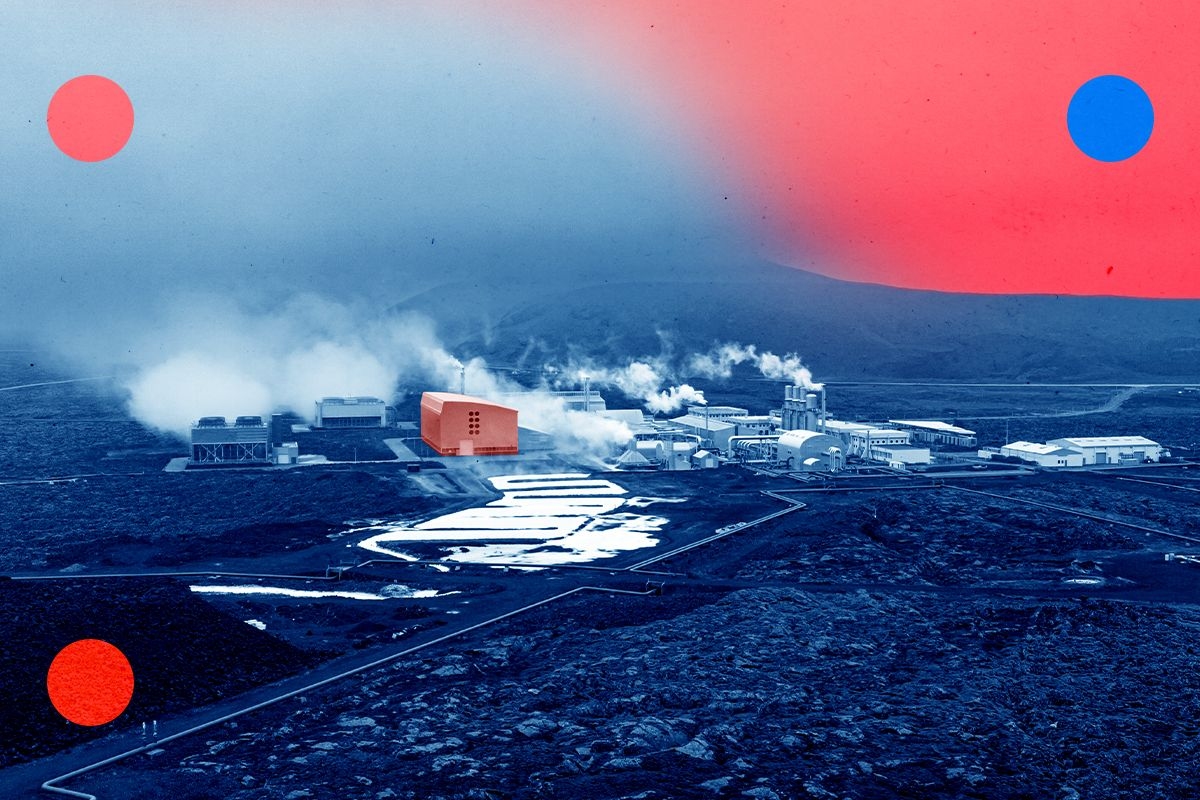
Where there’s heat — like, say, the molten core of the Earth — there’s energy.

Could the answer to our energy demand conundrums lie beneath our feet? And no, I’m not talking about oil, coal, or natural gas. I’m referring to the fundamental stuff of energy itself: heat. Geothermal power is having something of a moment as a non-carbon-emitting source of electricity that everyone seems to like — including climate activists, the oil and gas industry, technology companies, and even the Trump White House and Republican-controlled Congress.
Geothermal energy has been in use for decades, but has seemingly faced fundamental geological and physical restrictions in how much of a resource it could ever be. Now, however, thanks to new technological and process developments, including some borrowed from the oil and gas industry, geothermal could become a pillar of the energy system, potentially making up as much as 90 gigawatts of capacity by the middle of the century, roughly equal to nuclear power today.
But I’m getting ahead of myself — let’s start with the basics.
At its most fundamental, geothermal energy is the heat from the Earth’s core made usable up here on top of the crust. The International Energy Agency estimates that the Earth holds 45 terawatts of continuous heat flow, thanks to a mixture of energy left over from the planet’s formation and the radioactive decay of isotopes in its core and mantle of layers, where the temperature is probably around 5,000 degrees Celsius. In general, temperatures go up around 25 degrees per kilometer you go beneath the Earth’s crust.
Any geothermal system needs three things: heat, fluid, and permeability. The energy comes from heat, which is transferred through fluid, and the fluid has to move through permeable rocks to reach the surface. Traditional geothermal involves finding fluid — typically water or steam — that can be brought to the surface and used to spin turbines that generate electricity. Sometimes this happens directly with underground steam; in other cases, extremely hot water under high pressure is converted to steam as it’s brought to the surface; in still other cases, geothermal heat is used to heat another liquid, which is then vaporized to spin a turbine.
Traditional geothermal is inherently limited, however — there’s only so much hot water already under the Earth’s surface that can be economically tapped. “It’s a great solution, but only in a handful of places on Earth where those conditions are met,” Drew Nelson, vice president of programs, policy, and strategy at Project InnerSpace, a geothermal nonprofit, told me. Iceland, Kenya, Indonesia, certain parts of the American Southwest have the ideal mix, but that still leaves a lot of untapped energy. “It’s hot everywhere underground,” Nelson said.
The number of hot rocks through which fluid can be pumped is far, far greater than the amount of naturally occurring hot steam or water. Enhanced geothermal systems bring fluid to already hot rocks, in a sense creating a reservoir that otherwise you’d have to rely on nature to supply. This is done using techniques borrowed from the oil and gas industry, including horizontal drilling and hydraulic fracturing, to run fluid through the hot rocks before bringing it back up to the surface.
A related technology, closed-loop geothermal (sometimes called “advanced geothermal”), runs fluid through underground pipes that harvest heat from rocks, instead of turning the rock themselves into a reservoir for hot fluid.
The United States is the once and perhaps future champion of geothermal power. We still have the world’s largest installed base of geothermal generation — but it’s largely from projects that were built between 1980 and 1995, according to the International Energy Association. About half of the United States’ roughly 4 gigawatts of geothermal capacity came online in the 1980s alone, according to Energy Information Administration data. Most of this is in California and Nevada.
The Department of Energy has estimated that geothermal could provide at least 90 gigawatts of power, or around 4% of total U.S. generation capacity, by 2050. In practice, however, geothermal could be more valuable on the grid than other more plentiful energy sources because it’s not weather dependent, meaning that much more of that capacity is consistently available.
Either way, the geothermal industry by 2050 will look very different from the one today. Recent growth has been concentrated in California, where utility regulators and the state legislature have instituted aggressive mandates for geothermal procurement, seeing it as a round-the-clock source of non-carbon-emitting power. Future growth, however, has started throughout the American West, and could, thanks to new technologies, flourish all over the world.
As with any source of power, especially if it can be used 24/7, the answer is likely technology companies. The Rhodium Group estimated that geothermal could supply “up to 64%” of future data center demand.
Last year, Meta signed a deal for 150 megawatts of geothermal power from Sage Geosystems, a Texas-based next-generation geothermal startup that specializes in long-duration power generation, and specifically energy storage. That would likely come online in 2027.
One of the leading enhanced geothermal companies, Fervo, has been providing power from a site in Nevada since 2023, and is developing a substantially larger, 500-megawatt project in Beaver County, Utah, near an existing Department of Energy research facility. That should be online by 2026. More recently, Fervo has inked deals with the likes of Google and Nevada utility NV Energy, and is working with the Department of Energy to expand its drilling and bring down costs.
The company has also hinted that it has a megadeal in the works, but even without that, Fervo has achieved impressive scale and results. The company has reported steadily decreasing drilling costs, falling from over $9 million per well to under $5 million from 2022 to 2024, and raised hundreds of millions of dollars from investors including Breakthrough Energy Ventures, DCVC, and Devon Energy.
What has made geothermal distinctive among the array of non-emitting energy sources is that Republicans like it, too. Tax credits accessible to geothermal developers were largely spared in the One Big Beautiful Bill Act, which featured deep cuts to wind and solar incentives. A gaggle of Republican lawmakers have visited Fervo’s Utah site, and Fervo Chief Executive Tim Latimer recently spoke alongside fossil energy executives with the American Energy Dominance Caucus, a bipartisan House caucus. Past bills to streamline permitting for geothermal exploration have had Republican and Democratic sponsors, often from Mountain West states.
Even Trump likes geothermal. The White House’s new AI Action Plan, released in July, calls on policymakers to “prioritize the interconnection of reliable, dispatchable power sources as quickly as possible and embrace new energy generation sources at the technological frontier,” including, by name, “enhanced geothermal.”
One major near-term risk for the geothermal buildout is Trump’s tariff regime, which will likely mean higher input costs for geothermal producers on materials like steel. Another is the new restrictions on tax credits established in the One Big Beautiful Bill Act, which penalize companies with supply chain or financial connections to so-called “foreign entities of concern,” a list of countries that includes North Korea, Iran, Russia, and most importantly in this context, China.
While the exact nexus between China and geothermal is not entirely clear, “there are parts of geothermal technologies, such as pressure valves and drill casings and well casings and the like, that are not unique to geothermal that are very much part of the fracking industry that could be exposed to Chinese investment or Chinese supply contracts,” Advait Arun, senior associate for energy finance at the Center for Public Enterprise, told me.
There’s also the issue of getting next-generation geothermal projects financed. While geothermal companies themselves are able to raise money from investors — Sage Geosystems raised a $17 million series A round last year, for instance, while XGS, a closed-loop geothermal startup, raised $13 million — getting normal project financing from banks and other traditional entities is more of a challenge compared to mature technologies like fracking for oil and gas.
“There was and remains an inherent risk in traditional hydrothermal that the financial community has been very aware of,” Project InnerSpace’s Nelson told me — that is, the scarcity of existing underground water resources. Next-generation geothermal could hopefully see less risk, though, because developers aren’t not searching for a particular reservoir of steam or fluid.
“Getting the financial community to understand that there’s far less risk there is an important piece of it,” Nelson added.
Industry estimates put conventional geothermal’s levelized cost between $64 and $106 per megawatt-hour, while the DOE has estimated that first of a kind of enhanced geothermal comes in at around $200 per megawatt-hour. Compare that to between $38 and $78 for solar, the fastest-growing source of new zero-carbon energy, and between $48 and $107 for natural gas, and you’ll see a challenge to be overcome.
The Biden administration’s goal was to drive next-generation geothermal costs down to $45 per megawatt-hour by 2035. Project InnerSpace projects that “enhanced geothermal can achieve an $88 per megawatt-hour levelized cost of energy” using first of a kind technology, assuming the project can access the investment tax credit and assuming some technologies of scale and efficiencies, which would make it competitive with many other non-carbon power sources. Those costs could come down to “between $50 and $60 per megawatt-hour” by 2035.
At that level, according to the IEA, geothermal would be “one of the cheapest dispatchable sources of low-emissions electricity, on a par or below hydro, nuclear and bioenergy,” and “would also be highly competitive with solar PV and wind paired with battery storage.”
Yes, so it would seem. As Carnegie Endowment researchers have pointed out, these levelized cost projections may not reflect the true value of geothermal. Key to geothermal’s appeal is its dispatchability, not dependent on the weather, and can be turned on or off or ramped up and down as needed.
Log in
To continue reading, log in to your account.
Create a Free Account
To unlock more free articles, please create a free account.
On Redwood Materials’ milestone, states welcome geothermal, and Indian nuclear
Current conditions: Powerful winds of up to 50 miles per hour are putting the Front Range states from Wyoming to Colorado at high risk of wildfire • Temperatures are set to feel like 101 degrees Fahrenheit in Santa Fe in northern Argentina • Benin is bracing for flood flooding as thunderstorms deluge the West African nation.

New York Governor Kathy Hochul inked a partnership agreement with Ontario Premier Doug Ford on Friday to work together on establishing supply chains and best practices for deploying next-generation nuclear technology. Unlike many other states whose formal pronouncements about nuclear power are limited to as-yet-unbuilt small modular reactors, the document promised to establish “a framework for collaboration on the development of advanced nuclear technologies, including large-scale nuclear” and SMRs. Ontario’s government-owned utility just broke ground on what could be the continent’s first SMR, a 300-megawatt reactor with a traditional, water-cooled design at the Darlington nuclear plant. New York, meanwhile, has vowed to build at least 1 gigawatt of new nuclear power in the state through its government-owned New York Power Authority. Heatmap’s Matthew Zeitlin wrote about the similarities between the two state-controlled utilities back when New York announced its plans. “This first-of-its-kind agreement represents a bold step forward in our relationship and New York’s pursuit of a clean energy future,” Hochul said in a press release. “By partnering with Ontario Power Generation and its extensive nuclear experience, New York is positioning itself at the forefront of advanced nuclear technology deployment, ensuring we have safe, reliable, affordable, and carbon-free energy that will help power the jobs of tomorrow.”
Hochul is on something of a roll. She also repealed a rule that’s been on the books for nearly 140 years that provided free hookups to the gas system for new customers in the state. The so-called 100-foot-rule is a reference to how much pipe the state would subsidize. The out-of-pocket cost for builders to link to the local gas network will likely be thousands of dollars, putting the alternative of using electric heat and cooking appliances on a level playing field. “It’s simply unfair, especially when so many people are struggling right now, to expect existing utility ratepayers to foot the bill for a gas hookup at a brand new house that is not their own,” Hochul said in a statement. “I have made affordability a top priority and doing away with this 40-year-old subsidy that has outlived its purpose will help with that.”
Redwood Materials, the battery recycling startup led by Tesla cofounder J.B. Straubel, has entered into commercial production at its South Carolina facility. The first phase of the $3.5 billion plant “has brought a system online that’s capable of recovering 20,000 metric tons of critical minerals annually, which isn’t full capacity,” Sawyer Merritt, a Tesla investor, posted on X. “Redwood’s goal is to keep these resources here; recovered, refined, and redeployed for America’s advantage,” the company wrote in a blog post on its website. “This strategy turns yesterday’s imports into tomorrow’s strategic stockpile, making the U.S. stronger, more competitive, and less vulnerable to supply chains controlled by China and other foreign adversaries.”
A 13-state alliance at the National Association of State Energy Officials launched a new accelerator program Friday that’s meant to “rapidly expand geothermal power development.” The effort, led by state energy offices in Arizona, California, Colorado, Hawaii, Idaho, Louisiana, Montana, Nevada, New Mexico, Oregon, Pennsylvania, Utah, and West Virginia, “will work to establish statewide geothermal power goals and to advance policies and programs that reduce project costs, address regulatory barriers, and speed the deployment of reliable, firm, flexible power to the grid.” Statements from governors of red and blue states highlighted the energy source’s bipartisan appeal. California Governor Gavin Newsom, a Democrat, called geothermal a key tool to “confront the climate crisis.” Idaho’s GOP Governor Brad Little, meanwhile, said geothermal power “strengthens communities, supports economic growth, and keeps our grid resilient.” If you want to review why geothermal is making a comeback, read this piece by Matthew.
Sign up to receive Heatmap AM in your inbox every morning:
Yet another pipeline is getting the greenlight. Last week, the Federal Energy Regulatory Commission approved plans for Mountain Valley’s Southgate pipeline, clearing the way for construction. The move to shorten the pipeline’s length from 75 miles down to 31 miles, while increasing the diameter of the project to 30 inches from between 16 and 23 inches, hinged on whether FERC deemed the gas conduit necessary. On Thursday, E&E News reported, FERC said the developers had demonstrated a need for the pipeline stretching from the existing Mountain Valley pipeline into North Carolina.
Last week, I told you about a bill proposed in India’s parliament to reform the country’s civil liability law and open the nuclear industry to foreign companies. In the 2010s, India passed a law designed to avoid another disaster like the 1984 Bhopal chemical leak that killed thousands but largely gave the subsidiary of the Dow Chemical Corporation that was responsible for the accident a pass on payouts to victims. As a result, virtually no foreign nuclear companies wanted to operate in India, lest an accident result in astronomical legal expenses in the country. (The one exception was Russia’s state-owned Rosatom.) In a bid to attract Western reactor companies, Indian lawmakers in both houses of parliament voted to repeal the liability provisions, NucNet reported.
The critically endangered Lesser Antillean iguana has made a stunning recovery on the tiny, uninhabited islet of Prickly Pear East near Anguilla. A population of roughly 10 breeding-aged lizards ballooned to 500 in the past five years. “Prickly Pear East has become a beacon of hope for these gorgeous lizards — and proves that when we give native wildlife the chance, they know what to do,” Jenny Daltry, Caribbean Alliance Director of nature charities Fauna & Flora and Re:wild, told Euronews.
The fourth-generation gas-cooled reactor company ZettaJoule is setting up shop at an unnamed university.
The appeal of next-generation nuclear technology is simple. Unlike the vast majority of existing reactors that use water, so-called fourth-generation units use coolants such as molten salt, liquid metal, or gases that can withstand intense heat such as helium. That allows the machines to reach and maintain the high temperatures necessary to decarbonize industrial processes, which currently only fossil fuels are able to reach.
But the execution requirements of these advanced reactors are complex, making skepticism easy to understand. While the U.S., Germany, and other countries experimented with fourth-generation reactors in earlier decades, there is only one commercial unit in operation today. That’s in China, arguably the leader in advanced nuclear, which hooked up a demonstration model of a high-temperature gas-cooled reactor to its grid two years ago, and just approved building another project in September.
Then there’s Japan, which has been operating its own high-temperature gas-cooled reactor for 27 years at a government research site in Ibaraki Prefecture, about 90 minutes north of Tokyo by train. Unlike China’s design, it’s not a commercial power reactor. Also unlike China’s design, it’s coming to America.
Heatmap has learned that ZettaJoule, an American-Japanese startup led by engineers who worked on that reactor, is now coming out of stealth and laying plans to build its first plant in Texas.
For months, the company has quietly staffed up its team of American and Japanese executives, including a former U.S. Nuclear Regulatory Commission official and a high-ranking ex-administrator from the industrial giant Mitsubishi. It’s now preparing to decamp from its initial home base in Rockville, Maryland, to the Lone Star State as it prepares to announce its debut project at an as-yet-unnamed university in Texas.
“We haven’t built a nuclear reactor in many, many decades, so you have only a handful of people who experienced the full cycle from design to operations,” Mitsuo Shimofuji, ZettaJoule’s chief executive, told me. “We need to complete this before they retire.”
That’s where the company sees its advantage over rivals in the race to build the West’s first commercial high-temperature gas reactor, such as Amazon-backed X-energy or Canada’s StarCore nuclear. ZettaJoule’s chief nuclear office, Kazuhiko Kunitomi, oversaw the construction of Japan’s research reactor in the 1990s. He’s considered Japan’s leading expert in high-temperature gas reactors.
“Our chief nuclear officer and some of our engineers are the only people in the Western world who have experience of the whole cycle from design to construction to operation of a high temperature gas reactor,” Shimofuji said.
Like X-energy’s reactor, ZettaJoule’s design is a small modular reactor. With a capacity of 30 megawatts of thermal output and 12 megawatts of electricity, the ZettaJoule reactor qualifies as a microreactor, a subcategory of SMR that includes anything 20 megawatts of electricity or less. Both companies’ reactors will also run on TRISO, a special kind of enriched uranium with cladding on each pellet that makes the fuel safer and more efficient at higher temperatures.
While X-energy’s debut project that Amazon is financing in Washington State is a nearly 1-gigawatt power station made up of at least a dozen of the American startup’s 80-megawatt reactors, ZettaJoule isn’t looking to generate electricity.
The first new reactor in Texas will be a research reactor, but the company’s focus is on producing heat. The reactor already working in Japan, which produces heat, demonstrates that the design can reach 950 degrees Celsius, roughly 25% higher than the operating temperature of China’s reactor.
The potential for use in industrial applications has begun to attract corporate partners. In a letter sent Monday to Ted Garrish, the U.S. assistant secretary of energy in charge of nuclear power — a copy of which I obtained — the U.S. subsidiary of the Saudi Arabian oil goliath Aramco urged the Trump administration to support ZettaJoule, and said that it would “consider their application to our operations” as the technology matures. ZettaJoule is in talks with at least two other multinational corporations.
The first new reactor ZettaJoule builds won’t be identical to the unit in Japan, Shimofuji said.
“We are going to modernize this reactor together with the Japanese and U.S. engineering partners,” he said. “The research reactor is robust and solid, but it’s over-engineered. What we want to do is use the safety basis but to make it more economic and competitive.”
Once ZettaJoule proves its ability to build and operate a new unit in Texas, the company will start exporting the technology back to Japan. The microreactor will be its first product line.
“But in the future, we can scale up to 20 times bigger,” Shimofuji said. “We can do 600 megawatts thermal and 300 megawatts electric.”
Another benefit ZettaJoule can tap into is the sweeping deal President Donald Trump brokered with Japanese Prime Minister Sanae Takaichi in October, which included hundreds of billions of dollars for new reactors of varying sizes, including the large-scale Westinghouse AP1000. That included financing to build GE Vernova Hitachi Nuclear Energy’s 300-megawatt BWRX-300, one of the West’s leading third-generation SMRs, which uses a traditional water-cooled design.
Unlike that unit, however, ZettaJoule’s micro-reactor is not a first-of-a-kind technology, said Chris Gadomski, the lead nuclear analyst at the consultancy BloombergNEF.
“It’s operated in Japan for a long, long time,” he told me. “So that second-of-a-kind is an attractive feature. Some of these companies have never operated a reactor. This one has done that.”
A similar dynamic almost played out with large-scale reactors more than two decades ago. In the late 1990s, Japanese developers built four of GE and Hitachi’s ABWR reactor, a large-scale unit with some of the key safety features that make the AP1000 stand out compared to its first- and second-generation predecessors. In the mid 2000s, the U.S. certified the design and planned to build a pair in South Texas. But the project never materialized, and America instead put its resources into Westinghouse’s design.
But the market is different today. Electricity demand is surging in the near term from data centers and in the long term from electrification of cars and industry. The need to curb fossil fuel consumption in the face of worsening climate change is more widely accepted than ever. And China’s growing dominance over nuclear energy has rattled officials from Tokyo to Washington.
“We need to deploy this as soon as possible to not lose the experienced people in Japan and the U.S.,” Shimofuji said. “In two or three years time, we will get a construction permit ideally. We are targeting the early 2030s.”
If every company publicly holding itself to that timeline is successful, the nuclear industry will be a crowded field. But as history shows, those with the experience to actually take a reactor from paper to concrete may have an advantage.
It’s now clear that 2026 will be big for American energy, but it’s going to be incredibly tense.
Over the past 365 days, we at The Fight have closely monitored numerous conflicts over siting and permitting for renewable energy and battery storage projects. As we’ve done so, the data center boom has come into full view, igniting a tinderbox of resentment over land use, local governance and, well, lots more. The future of the U.S. economy and the energy grid may well ride on the outcomes of the very same city council and board of commissioners meetings I’ve been reporting on every day. It’s a scary yet exciting prospect.
To bring us into the new year, I wanted to try something a little different. Readers ask me all the time for advice with questions like, What should I be thinking about right now? And, How do I get this community to support my project? Or my favorite: When will people finally just shut up and let us build things? To try and answer these questions and more, I wanted to give you the top five trends in energy development (and data centers) I’ll be watching next year.
The best thing going for American renewable energy right now is the AI data center boom. But the backlash against developing these projects is spreading incredibly fast.
Do you remember last week when I told you about a national environmental group calling for data center moratoria across the country? On Wednesday, Senator Bernie Sanders called for a nationwide halt to data center construction until regulations are put in place. The next day, the Working Families Party – a progressive third party that fields candidates all over the country for all levels of government – called for its candidates to run in opposition to new data center construction.
On the other end of the political spectrum, major figures in the American right wing have become AI skeptics critical of the nascent data center buildout, including Florida Governor Ron DeSantis, Missouri Senator Josh Hawley, and former Trump adviser Steve Bannon. These figures are clearly following the signals amidst the noise; I have watched in recent months as anti-data center fervor has spread across Facebook, with local community pages and groups once focused on solar and wind projects pivoting instead to focus on data centers in development near them.
In other words, I predicted just one month ago, an anti-data center political movement is forming across the country and quickly gaining steam (ironically aided by the internet and algorithms powered by server farms).
I often hear from the clean energy sector that the data center boom will be a boon for new projects. Renewable energy is the fastest to scale and construct, the thinking goes, and therefore will be the quickest, easiest, and most cost effective way to meet the projected spike in energy demand.
I’m not convinced yet that this line of thinking is correct. But I’m definitely sure that no matter the fuel type, we can expect a lot more transmission development, and nothing sparks a land use fight more easily than new wires.
Past is prologue here. One must look no further than the years-long fight over the Piedmont Reliability Project, a proposed line that would connect a nuclear power plant in Pennsylvania to data centers in Virginia by crossing a large swathe of Maryland agricultural land. I’ve been covering it closely since we put the project in our inaugural list of the most at-risk projects, and the conflict is now a clear blueprint.
In Wisconsin, a billion-dollar transmission project is proving this thesis true. I highly recommend readers pay close attention to Port Washington, where the release of fresh transmission line routes for a massive new data center this week has aided an effort to recall the city’s mayor for supporting the project. And this isn’t even an interstate project like Piedmont.
While I may not be sure of the renewable energy sector’s longer-term benefits from data center development, I’m far more confident that this Big Tech land use backlash is hitting projects right now.
The short-term issue for renewables developers is that opponents of data centers use arguments and tactics similar to those deployed by anti-solar and anti-wind advocates. Everyone fighting data centers is talking about ending development on farmland, avoiding changes to property values, stopping excess noise and water use, and halting irreparable changes to their ways of life.
Only one factor distinguishes data center fights from renewable energy fights: building the former potentially raises energy bills, while the latter will lower energy costs.
I do fear that as data center fights intensify nationwide, communities will not ban or hyper-regulate the server farms in particular, but rather will pass general bans that also block the energy projects that could potentially power them. Rural counties are already enacting moratoria on solar and wind in tandem with data centers – this is not new. But the problem will worsen as conflicts spread, and it will be incumbent upon the myriad environmentalists boosting data center opponents to not accidentally aid those fighting zero-carbon energy.
This week, the Bureau of Land Management approved its first solar project in months: the Libra facility in Nevada. When this happened, I received a flood of enthusiastic and optimistic emails and texts from sources.
We do not yet know whether the Libra approval is a signal of a thaw inside the Trump administration. The Interior Department’s freeze on renewables permitting decisions continues mostly unabated, and I have seen nothing to indicate that more decisions like this are coming down the pike. What we do know is that ahead of a difficult midterm election, the Trump administration faces outsized pressure to do more to address “affordability,” Democrats plan to go after Republicans for effectively repealing the Inflation Reduction Act and halting permits for solar and wind projects, and there’s a grand bargain to be made in Congress over permitting reform that rides on an end to the permitting freeze.
I anticipate that ahead of the election and further permitting talks in Congress, the Trump administration will mildly ease its chokehold on solar and wind permits because that is the most logical option in front of them. I do not think this will change the circumstances for more than a small handful of projects sited on federal lands that were already deep in the permitting process when Trump took power.
It’s impossible to conclude a conversation about next year’s project fights without ending on the theme that defined 2025: battery fire fears are ablaze, and they’ll only intensify as data centers demand excess energy storage capacity.
The January Moss Landing fire incident was a defining moment for an energy sector struggling to grapple with the effects of the Internet age. Despite bearing little resemblance to the litany of BESS proposals across the country, that one hunk of burning battery wreckage in California inspired countless communities nationwide to ban new battery storage outright.
There is no sign this trend will end any time soon. I expect data centers to only accelerate these concerns, as these facilities can also catch fire in ways that are challenging to address.