Current conditions: A wildfire dubbed the Max Road Fire in the Everglades has torched more than 5,000 acres of the treasured Florida wetlands • Contrary to its name, Argentina’s Tierra del Fuego is bracing for light snow today at the southern tip of the Americas • An unseasonable cold snap is bringing morning frost temperatures to the Upper Midwest and Northeast.
THE TOP FIVE
1. Trump backs federal gasoline tax suspension
Last week, Indiana extended its suspension of the state sales tax on gasoline for another 30 days and temporarily paused the state tax on gas, dropping prices by an average of $0.59 per gallon. On Monday, Kentucky’s temporary $0.10 reduction in gas taxes takes effect. Now the White House is considering replicating the idea on the national level. In an interview Monday morning with CBS News, President Donald Trump proposed suspending the federal gas tax “for a period of time.” Calling it a “great idea,” he said “when gas goes down, we’ll let it phase back in.” Gas prices have soared by an average of 50% since the start of the Iran War exactly 73 days ago. Prices hit a high on Sunday of over $4.52 per gallon, according to AAA data. But suspending excise taxes of more than $0.18 per gallon on gas and $0.24 on diesel requires legislation from Congress. That could be tricky. Pausing the tax would cost the federal government roughly $500 million per week. But lawmakers from both parties have already proposed bills that could do just that, including one Senator Josh Hawley, the Republican from Missouri, introduced on Monday.
2. New England is poised for a major new gas pipeline push
The biggest natural gas-producing region in the United States isn’t in Texas. It isn’t in the oil-rich Dakotas either. It’s abutting the densely populated Northeast, in Pennsylvania’s Marcellus Shale. Yet neighboring New England is the country’s largest destination for liquified natural gas imports arriving by tanker. Why bring in costly gas, often produced overseas, to the deepwater port in Massachusetts Bay, when American-made molecules are drilled just a few hundred miles away? Because, as Heatmap’s Matthew Zeitlin has previously reported, there isn’t enough pipeline infrastructure to affordably pump gas from Pennsylvania into New York or New England, thanks in large part to policies from Democratic governors to halt pipeline infrastructure in the name of fighting climate change, even as the Northeast’s dependence on gas-fired electricity grew. That may soon change. Williams Companies broke ground on a new gas pipeline expansion in New York last month. Now the Calgary-based pipeline giant Enbridge is planning to extend the Algonquin Gas Transmission line, the company told the Trump administration’s National Energy Dominance Council, according to unnamed official cited by E&E News. It’s unclear when more details are due out, but Democratic governors that previously opposed pipelines are already signaling an openness to the infrastructure.
Oil exports from Alaska, meanwhile, are increasing as Asian buyers seek options for crude that don’t rely on passing the still mostly closed Strait of Hormuz. On Monday evening, Northern Journal reported that two tankers had departed the Alaskan port of Valdez for Asia in recent weeks. That’s the same number of crude shipments to Asia in all of 2025.
3. China breaks ground on yet another new large-scale reactor
Another day, another large-scale Hualong One reactor begins construction in China. Crews poured the first major concrete for the fourth reactor at the Taipingling nuclear plant in Huizhou, in China’s southern Guangdong province. It’s the fourth of six Hualong Ones, Beijing’s flagship gigawatt-scale pressurized water reactor, planned at the site. Russia, meanwhile, remains so determined to move forward on international exports of its own gigawatt-sized pressurized water reactors that the Kremlin’s state-owned nuclear company, Rosatom, has said it’s still constructing the second two units at Iran’s first and only atomic power station, despite the ongoing conflict with the U.S. and Israel.
While at least two companies have broken ground on new commercial reactors in the U.S. in recent weeks, the U.S. industry’s most recent headlines offer a different snapshot of where the American atom is at. TerraPower, the Bill Gates-founded next-generation reactor developer that just began construction on its first power plant in Wyoming, has joined other nuclear startups in the race to generate early revenue by manufacturing and selling rare medical isotopes. Back in March, I broke news in this newsletter that the reactor startup Oklo had earned its first Nuclear Regulatory Commission license for a medical isotope facility. Now TerraPower is constructing its first medical isotope plant at a laboratory in Philadelphia, Pennsylvania. At the other end of the U.S. industry, Fermi America, the startup founded by former Texas Governor Rick Perry to build a record-breaking data center complex powered by a series of giant Westinghouse AP1000 reactors, is scrambling to save itself from total collapse following the firing of its chief executive officer. In a bid to avert disaster, the company’s second-largest shareholder, the investment firm Caddis Capital, told NucNet it supports Fermi’s attempt to turn things around.
Sign up to receive Heatmap AM in your inbox every morning:
4. Interior Department will auction off 197,000 acres for geothermal next month
The Department of the Interior’s Bureau of Land Management will hold a lease auction for geothermal developers seeking federal land in New Mexico next month. The auction will cover 68 parcels spanning more than 197,000 acres across five counties of a state rich in hot rocks and eager to harvest more energy from underground. So far, the AI-enhanced geothermal startup Zanskar owns a site in New Mexico, and the next-generation company XGS Energy is planning its own 150-megawatt project. The lease sale will take place on June 16 for an hour starting at 10 a.m. ET, per Think GeoEnergy. The auction comes just three months after a new bipartisan bill to boost geothermal was introduced in Congress, as Matthew reported at the time.
Even in countries where the geothermal industry is well developed and generates much of the grid’s electricity, there are limits to how much hot rocks can meet surging demand from data centres. Microsoft had planned to build a $1 billion data center in Kenya to tap into the East African nation’s vast geothermal power network. But this week, Kenyan President William Ruto suspended the deal, which also included the United Arab Emirates-based AI firm G42, over concern that the gigawatt of electricity the data center would demand would devour more than a third of the country’s entire power supply.
5. The U.S. passes law to boost the hydroelectric sector
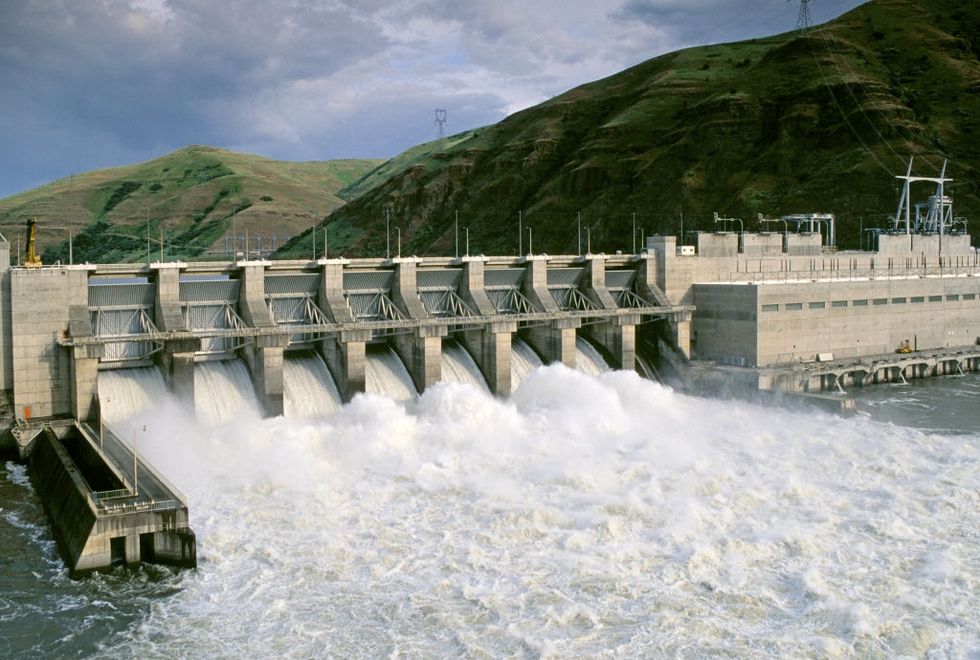
 The Lower Granite Lock and Dam on Washington’s Snake River.Greg Vaughn /VW PICS/Universal Images Group via Getty Images
Less than a year since the bipartisan Build More Hydro bill stalled in the House after passing the Senate in a unanimous vote, roughly 100 megawatts of hydroelectric capacity have been put on hold, and another 36 megawatts have been forced into limbo. Even more of the U.S. fleet is rapidly approaching a relicensing cliff in the coming years, with an uncertain future as the nation’s oldest and most reliable renewable plants suffer under a byzantine regulatory process that makes dam owners actually envy the notoriously heavily-regulated nuclear sector. Things just got slightly easier for a handful of U.S. hydroelectric plants. On Monday, Trump signed legislation directing the Federal Energy Regulatory Commission to extend construction deadlines for roughly three dozen stations delayed due to the pandemic and supply chain shortages.
“Today’s law is a breakthrough that delivers 2,600 megawatts of clean hydropower and $6.5 billion in private investment critical to powering American homes, businesses, and industries,” Malcolm Woolf, the president of the National Hydropower Association, said in a statement.
THE KICKER
Offshore wind may be moving forward in Virginia, but the Trump administration’s assault on the sector has spurred a major waterfront development in Norfolk to pivot away from the seaward turbines and instead double down on shipbuilding. The shift, reported in The Virginian-Pilot, comes after the Trump administration yanked Biden-era funding meant to support the industry. But Richmond isn’t abandoning offshore wind. As I told you the other week, Governor Abigail Spanberger just signed a bill meant to support training and expansion of the state’s offshore wind workforce.
Editor’s note: This story has been updated to correct the location of Terrapower’s isotope plant.


 The Lower Granite Lock and Dam on Washington’s Snake River.Greg Vaughn /VW PICS/Universal Images Group via Getty Images




 Solar capacity keeps growing. GoodPower