Current conditions: Super Typhoon Sinlaku made landfall over America’s Pacific territories as the strongest storm in the world, walloping the Northern Mariana Islands with 42-foot waves • New York City’s forecast high of 88 degrees Fahrenheit could break the the 87-degree record set for this day in 1941 • Equatorial Guinea faces flooding as heavy thunderstorms are on track to continue for at least the next week.
THE TOP FIVE
1. The U.S. blockade is, indeed, halting ships in the Strait of Hormuz
 The blockade.Yasin Demirci/Anadolu via Getty Images
The United States’ blockade of Iran’s blockade of the Strait of Hormuz is confirmed to be in effect. A Financial Times analysis of tracking data showed several tankers transiting the waterway “either stopped or turned around.” While “several cargo ships that had come from Iranian ports, including at least two sanctioned tankers, attempted to cross the narrow waterway in the hours after the embargo came into effect on Monday,” reporters Alice Hancock and Steff Chávez wrote, “none have gone further than the mouth of the Gulf of Oman.”
China, whose vessels previously passed through the Strait of Hormuz even as Iran blocked the route for ships coming from or heading to Washington’s Arab allies on the opposite shore of the Persian Gulf, called the U.S. naval siege “dangerous and irresponsible.” With Tehran stopping ships coming from the Gulf Cooperation Council nations and the Americans intercepting vessels from Iranian ports, “the de facto result of it is that no one is really going to be able to leave the Gulf,” Cornell University’s Nicolas Mulder told Heatmap’s Matthew Zeitlin. “And that’s kind of where I see this game theoretically ending up.”
2. Exclusive: A rare earths startup pivots to extracting minerals from mining waste
Tactical Resources Corp wants to develop a rare earth mine in the area southeast of El Paso, Texas, where rich deposits have drawn a few investors to what could become a hub for the state’s production of the metals needed for modern energy and weapons technologies. But even under the best case scenario, it’ll be a while before the company produces minerals from its site. And demand for domestically supplied rare earths is only going up. So the company has found a faster way to get material to market. In March, the startup bought a long-running quarry near its mining site that already produces the Union Pacific railway’s ballast, the sharp, angular rocks that form the track bed. On Wednesday, I can exclusively report for this newsletter, Tactical Resources plans to announce that it has secured 1.5 million tons of “crushed aggregate feedstock” – tailings from the years of ballast mining — that “appear to contain consistent” levels of rare earth ores. The company said the stockpiled waste material “is expected to serve as a potential near-term feedstock” for the company’s Peak Rare Earth Project, the hard-rock mine located near the quarry. “With approximately 1.5 million tons of material now secured,” Ranjeet Sundher, Tactical Resources’ chief executive, told me in a statement, “we are positioning the Peak Project to advance without the delays typically associated with a new mine development.”
The company’s shift comes as mineral extraction methods once derided as poor alternatives for new large-scale mining gain new ground. Last month, the Trump administration, which sought to clear the way for more mining last year, offered up to $500 million for companies promising to commercialize novel ways of refining and recycling rare earths, as I reported at the time.
Sign up to receive Heatmap AM in your inbox every morning:
3. Constellation CEO: U.S. is ‘not going to win’ AI race against China
The top boss of the nation’s largest operator of nuclear and geothermal power stations, said the U.S. is “very behind” China in the race to build up enough energy to feed the data centers needed for artificial intelligence. Speaking at Tuesday’s Semafor World Economy conference in Washington, D.C., Constellation Energy Group CEO Joseph Dominguez said “we’re in some trouble” if the U.S. plan was to keep pace with China’s construction of power plants. “If this is going to be a race between China and the U.S. to build energy, might as well call it a day,” he said. Since 2010, he noted, China has added the equivalent capacity of the entire U.S. electrical system 1.5 times over. America’s best bet, Dominguez said, was to take advantage of how little of the U.S. system is currently being used by clearing space on the wires by managing peak energy demand. “It’s imperative that we win this ... for the defense of the nation and our way of life,” he said, and called for a national policy to supplant state-by-state approval processes. “If NIMBYism becomes the reason we lose the AI race, for whatever reason, we’re in a whole lot of trouble in this country.”
Back in March 2025, Tyler Norris, at the time a Duke University researcher, published an influential paper detailing how the U.S. could add gigawatts of additional data center capacity simply by having those server farms dial down power usage during hours when the grid is stressed. It represented, as Heatmap’s Matthew Zeitlin put it, “one weird trick for getting more data centers on the grid.” That the idea is now being all but endorsed by the top executive of a company that benefits from building more power generation shows how urgent the need is to come up with creative solutions to get around the bottlenecks for building new power stations. At the time, Norris — now part of a recently-assembled elite team of energy experts at Google — told me such an approach would also buy time to plan out what kind of new generation makes the most sense for the U.S. instead of just buying more gas turbines. It’s becoming a problem elsewhere. On Tuesday, the NAACP filed a lawsuit against Elon Musk’s xAI, accusing the company behind the Grok chat bot of illegally polluting the air with exhaust from the gas-fired turbines powering its data center complex south of Memphis, Tennessee.
4. Bezos-backed electric truck startup Slate gets a lifeline
Slate Auto has secured a much-needed cash infusion as the Jeff Bezos-backed electric vehicle startup scales up its manufacturing capacity ahead of the launch later this year of its affordable, mass-market pickup. The company said Monday it raised $650 million to prepare its plant in Warsaw, Indiana, before production begins “by the end of this year,” InsideEVs reported. The starting price for the company’s vehicle is expected to come out to about $25,000.
Another Bezos-related electric vehicle maker, the Amazon-backed Rivian, inked a deal with battery recycler Redwood Materials to repurpose 100 of the automaker’s lithium-ion packs for grid-scale energy storage. As part of the agreement, Rivian will provide the batteries to Redwood, which will integrate them into one of its grid-scale battery products. The power will be consumed on site by Rivian’s factory in Normal, Illinois. “At the same time, the massive amount of domestic battery assets already in the U.S. market represents a strategic energy resource,” JB Straubel, Redwood Materials founder and chief executive, said in a statement. “Our partnership with Rivian shows how EV battery packs can be turned into dispatchable energy resources, bringing new capacity online quickly, supporting critical manufacturing, and reducing strain on the grid without waiting years for new infrastructure. This is a scalable model for how we add meaningful energy capacity in the near term.”
5. South Carolina utility won’t make a final call on reviving its landmark nuclear project for another two years
Santee Cooper, South Carolina’s state-owned utility company, has given itself two years to decide whether a $2.7 billion deal to revive the state’s failed nuclear expansion will come to fruition. In December, the company reached a tentative agreement with New York investment firm Brookfield Asset Management, the majority owner of the Westinghouse Electric Company, to buy two partially built AP1000 reactors at the V.C. Summer nuclear plant. But Brookfield still hasn’t finalized the deal, according to the South Carolina Daily Gazette. Santee Cooper plans to outline the next steps for the project in June.
The Trump administration, meanwhile, is honing its plans for building nuclear power in space. On Tuesday, the White House released a six-page policy memo outlining its multi-agency strategy to produce a “nearterm demonstration and use of low- to mid-power space reactors in orbit and on the lunar surface.” Federal agencies, the memo read, “will establish cost-effective partnerships with private-sector innovators to meet near-term objectives that include safely deploying nuclear reactors in orbit as early as 2027 and on the Moon as early as 2030.”
THE KICKER
An era of small-scale solar panels that can generate power from spaces as small as balconies may be upon us here in New York. The state is considering a bill that would allow for the installation and grid connection of small-scale panels that apartment dwellers — even renters — could easily afford and install. Data Gothamist cited from the plug-in solar advocacy group Bright Saver suggests the panels can offshore power usage by 10% to 25%. “Most New York City residents live in rental apartments and multi-family dwellings, so up until now, they really haven’t had a way to take any advantage of solar options,” state Senator Liz Krueger, a Democrat who represents Manhattan’s East Side and the bill’s sponsor, told the news site. “This really is a game-changer because frankly, anybody who’s got about $300 can go buy one of these.”



 The blockade.Yasin Demirci/Anadolu via Getty Images




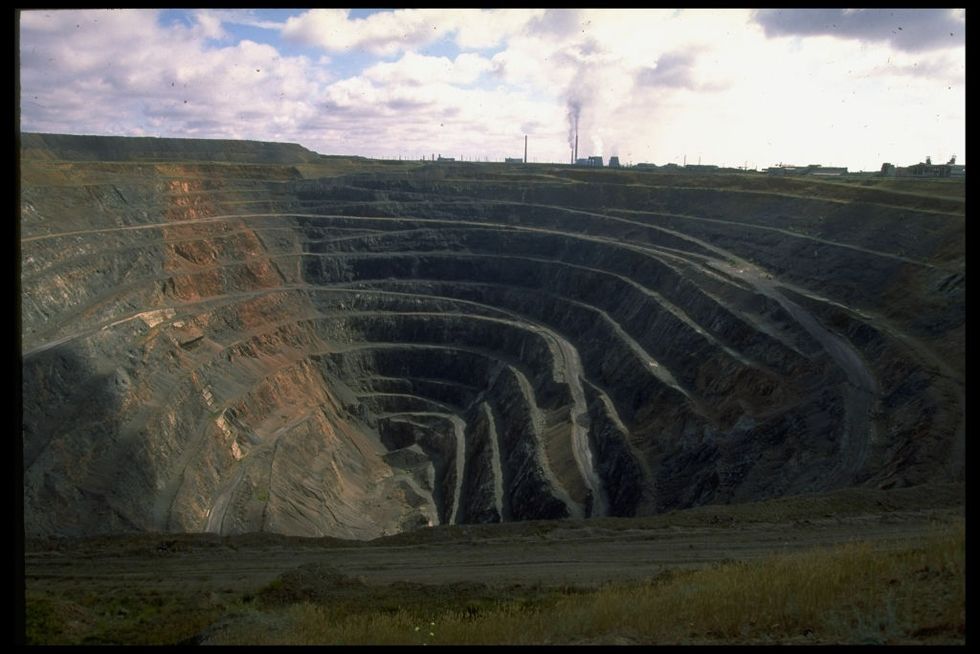 An old uranium mine in Stepnogorsk, Kazakhstan. Robert Nickelsberg/Getty Images
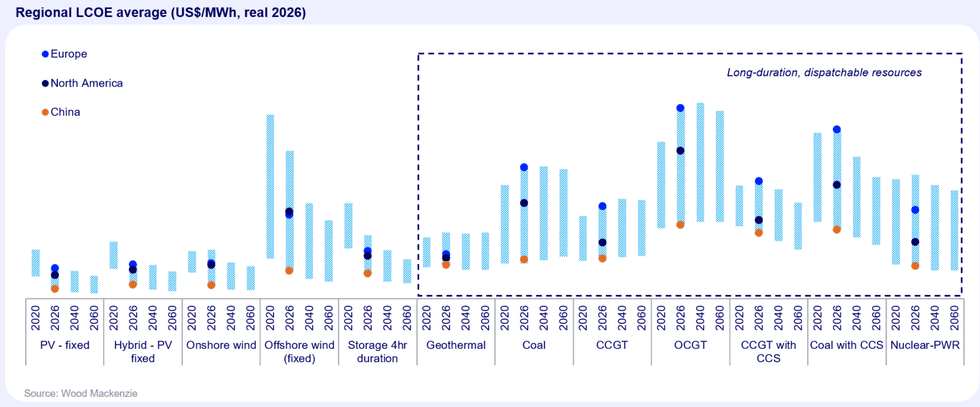 Four-hour stage compares very well to open-cycle gas turbines, labeled OCGT. Wood Mackenzie