Current conditions: A polar vortex is sweeping frigid air back into the Northeast and bringing up to 6 inches of snow to northern parts of New England • Temperatures in the Southeast are set to plunge 25 degrees Fahrenheit below last week’s averages, with highs below freezing in Atlanta • Temperatures in the Nigerian capital of Abuja, meanwhile, are nearing 100 degrees.
THE TOP FIVE
1. Heatmap’s big annual survey is out
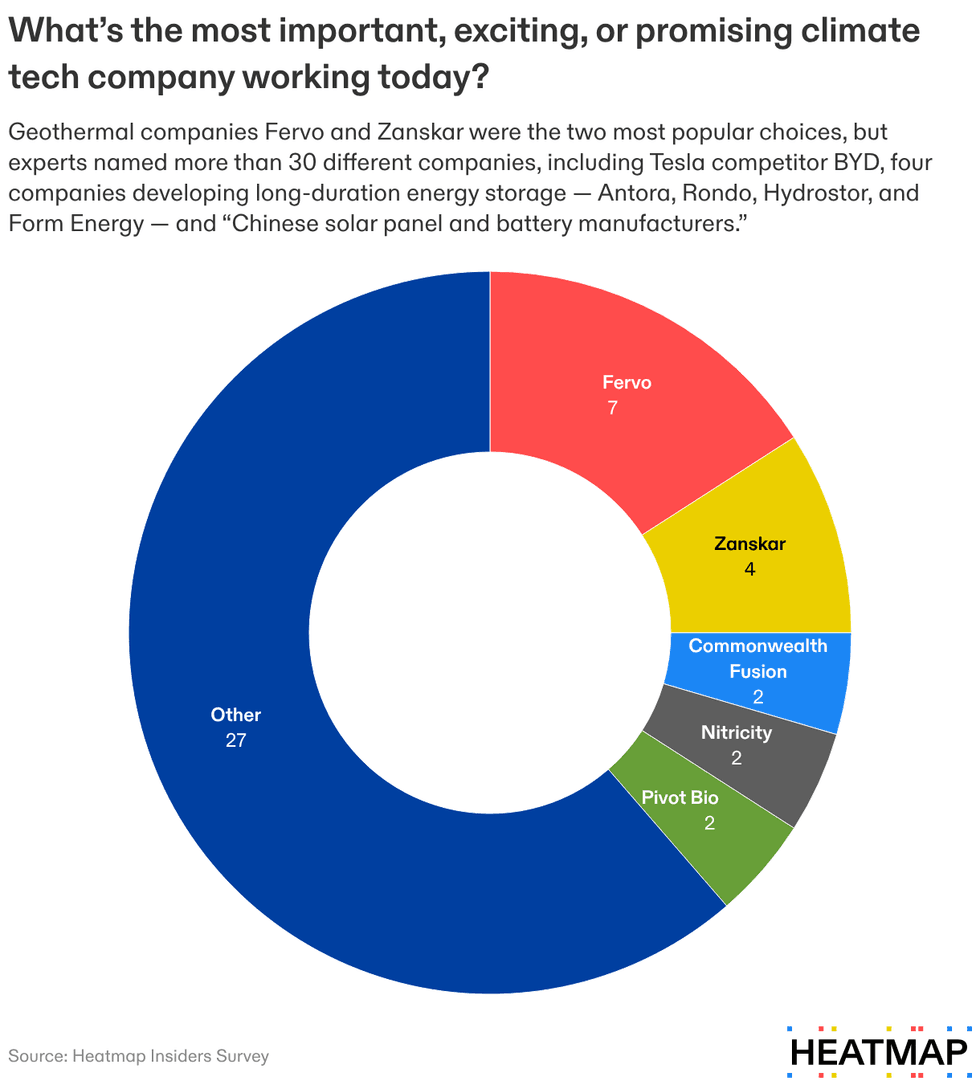
 A chart from the latest survey. Heatmap Pro
To comically understate the obvious, it’s been a big year for climate. So Heatmap called up 55 of the most discerning and disputatious experts — scientists, researchers, innovators, and reformers; some of whom led the Biden administration’s policy efforts, some of whom are harsh or heterodox critics of mainstream environmentalism. We asked them to take stock of everything going on now, from the Trump administration’s shifting policy landscape to China’s evolving place in the world.
The results of that inquiry are now out. You can check out everything on this homepage.
Or see:
- Which decarbonization technology is considered the furthest from prime time.
- Whether the data center buildout will slow decarbonization.
- Who’s the worst climate official in the Trump administration.
- What experts learned from the fight to save the Inflation Reduction Act.
- If China is a climate hero or villain.
- What’s next for climate change.
2. Wyoming poised to build the nation’s largest data center
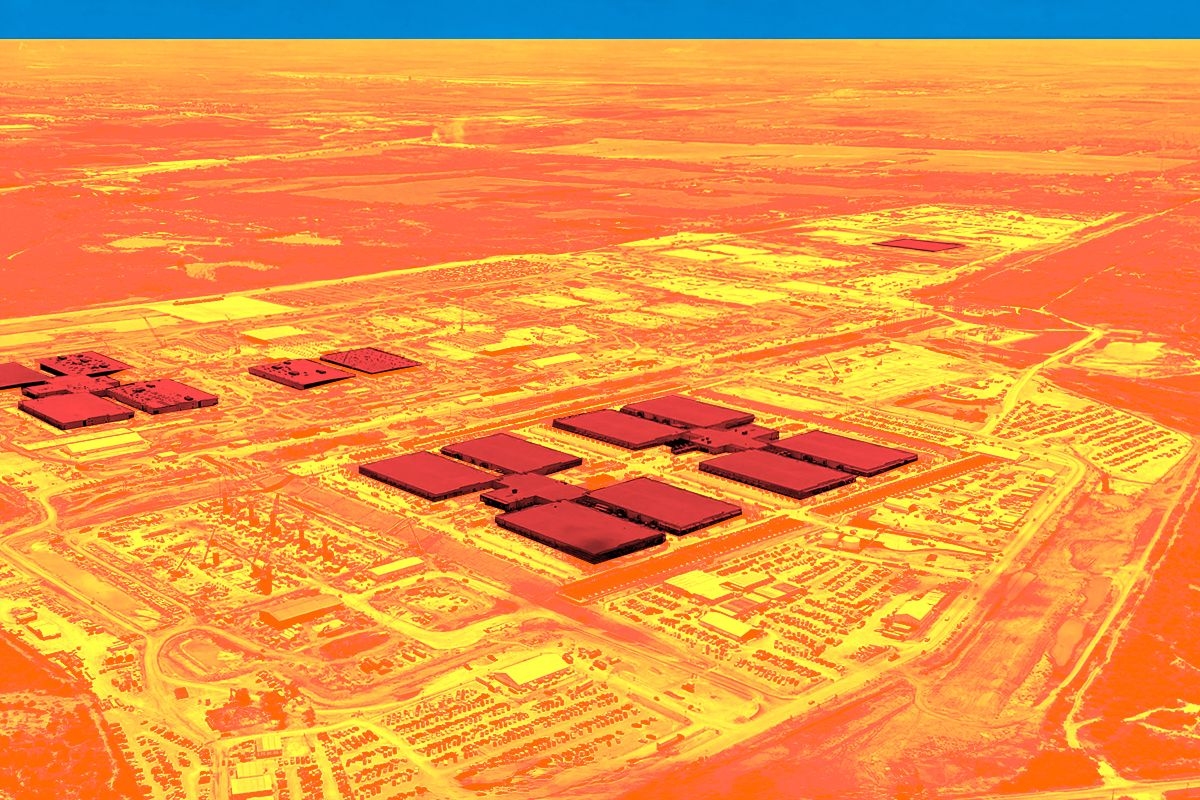
Wyoming is inching closer to building what could be the United States’ largest data center after commissioners in Laramie County last week unanimously approved construction of a complex designed to scale from an initial 1.8 gigawatts to 10 gigawatts. The facility, called Project Jade, is set to be built by the data center giant Crusoe, with the neighboring gas turbines to power the plant provided by BFC Power and Cheyenne Power Hub. Crusoe’s chief real estate officer, Matt Field, told commissioners last week that the first phase would “leverage natural gas with a potential pathway for CO2 sequestration in the future” by tapping into developer Tallgrass Energy Partners’ existing carbon well hub, Inside Climate News wrote Wednesday.
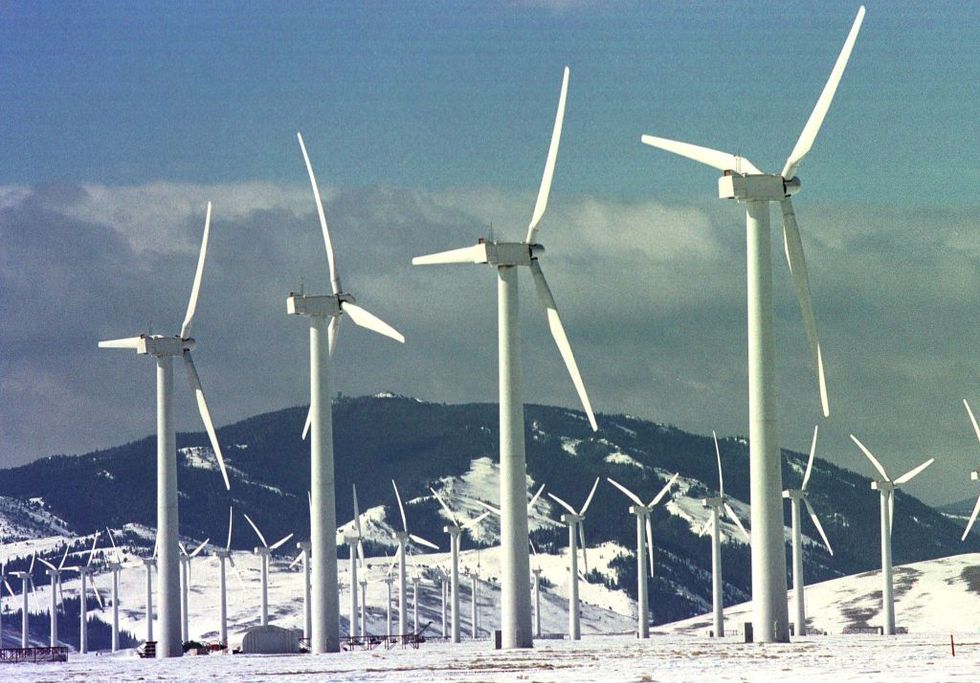
While the potential for renewables is under discussion, a separate state hearing last week highlighted mounting opposition to the most prolific source of clean power in the state: Wind energy. Nearly two dozen residents from central and southeast Wyoming lambasted a growing “wall” of wind turbines in what Wyofile described as “emotional pleas.” One Cheyenne resident named Wendy Volk said: “This is no longer a series of isolated projects. It is a continuous, or near continuous, industrial corridor stretching across multiple counties and landscapes.”
 A 2001 photo showing wind turbines in Wyoming. Michael Smith/Newsmakers
3. Global wind execs warn of Trump ‘spillover’
Global wind executives are warning of “negative spillover” effects on investor sentiment from the Trump administration’s suspended leases on all large U.S. offshore wind projects. In an interview with the Financial Times, Vestas CEO Henrik Andersen, who also serves as the president of the industry group WindEurope, called 2025 a “rollercaster” year. “When you have a 20- to 30-year investment program, the only way you can cover yourself for risk is to ask for a higher return,” he said. “When you get impairments in an industry, everyone would start saying, ‘could that hit us as well?’”
The British government seems willing to reduce that risk. On Wednesday, the United Kingdom handed out record subsidy contracts for offshore wind projects. At the same time, however, oil giant BP wrote down the value of its low-carbon business — which includes wind, solar, and hydrogen — by upward of $5 billion, according to The Wall Street Journal.
Sign up to receive Heatmap AM in your inbox every morning:
4. Microsoft inks one of the largest soil-based carbon removal deals ever
Microsoft on Thursday announced one of the largest soil-based deals to remove carbon from the atmosphere. Under a 12-year agreement, the tech giant will purchase 2.85 million credits from the startup Indigo Carbon PBC, which sequesters carbon dioxide in soil through regenerative agricultural practices. It’s the third deal between Indigo and Microsoft, building on 40,000 metric tons in 2024 and 60,000 last year. “Microsoft is pleased by Indigo’s approach to regenerative agriculture that delivers measurable results through verified credits and payments to growers, while advancing soil carbon science with advanced modeling and academic partnerships,” Phillip Goodman, Microsoft’s director of carbon removal, said in a statement. Microsoft, as my colleague Emily Pontecorvo wrote recently, has “dominated” carbon removal over the past year, increasing its purchases more than fivefold in 2025 compared to 2024.
5. McKinsey report finds big gaps between clean energy and 2030 goals
Despite major progress on clean energy, especially with solar and batteries, a new report by McKinsey & Company found big gaps between current deployments and 2030 goals. The analysis, the first from the megaconsultancy to include China and nuclear power, highlighted “notable discrepancies between announced projects and those with committed funding,” and warned that less than “15% of low-emissions technologies required to meet Paris-aligned goals have been deployed.” In a statement, Diego Hernandez Diaz, McKinsey partner and co-author of the report, said the “progress landscape is nuanced by region and technology and while achieving energy transition commitments remain paramount for countries and companies alike, recent announcements indicate that shifting priorities and slowing momentum have led to project pauses and cancellations across technologies.”
The findings come as emissions are rising. As I wrote in yesterday’s newsletter, the latest Rhodium Group estimate of U.S. emissions notched a reversal of the last two years of declines. In a new Carbon Brief analysis, climate scientist Zeke Hausfather found that 2025 was in the top-three warmest years on record with average surface temperatures reaching 1.44 Celsius above pre-industrial averages across eight independent datasets.
THE KICKER
China just installed the most powerful turbine ever built offshore. The 20-megawatt turbine off the coast of Fujian Province set a record for both capacity and rotor diameter, 300 meters from its 147-meter blades. “Compared with offshore wind farms with 16-megawatt units, 20-megawatt units can help wind farms reduce the number of units by 25%, save sea area, dilute development costs, and open up economic blockages for the large-scale development of deep-sea wind power,” the manufacturer, Goldwind, said in a statement.


 A chart from the latest survey. Heatmap Pro
 A 2001 photo showing wind turbines in Wyoming. Michael Smith/Newsmakers

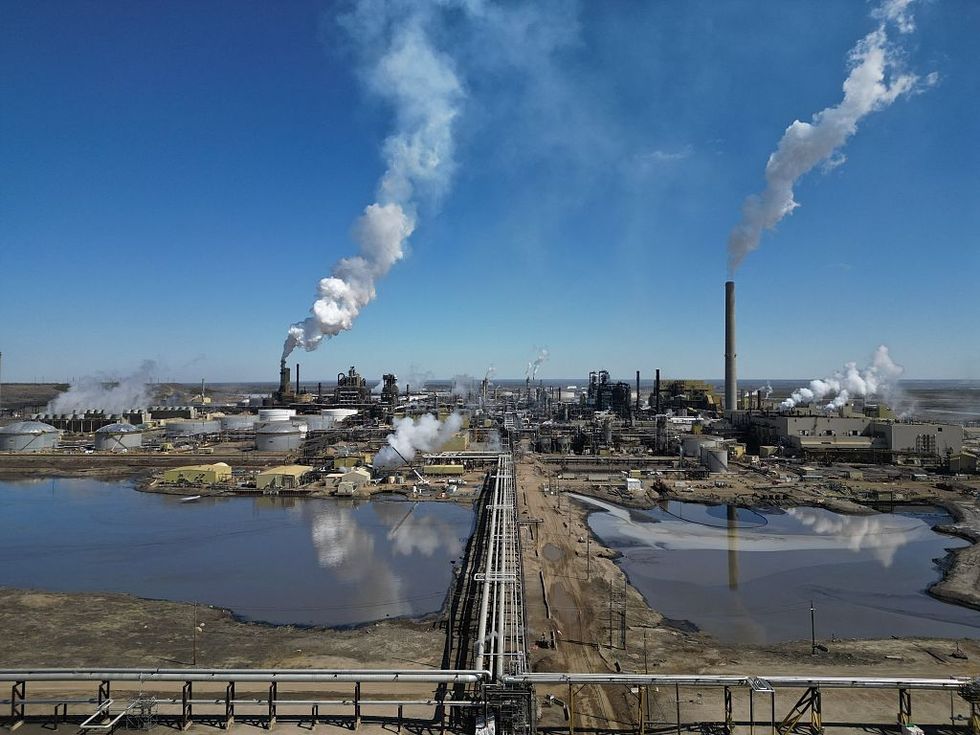 The Syncrude refinery at Mildred Lake in Alberta. Daphné LEMELIN / AFP via Getty Images