Current conditions: Thunderstorms are ripping through the Ohio Valley with winds of up to 85 miles per hour • The historic heat wave in the Southwest is finally cooling down, with temperatures in Phoenix hitting 100 degrees Fahrenheit today before easing into the mid-90s over the weekend • Hail storms that pummeled Laos damaged the roofs of thousands of homes in the capital Vientiane.
THE TOP FIVE
1. BYD already has plans for 20 dealerships in Canada
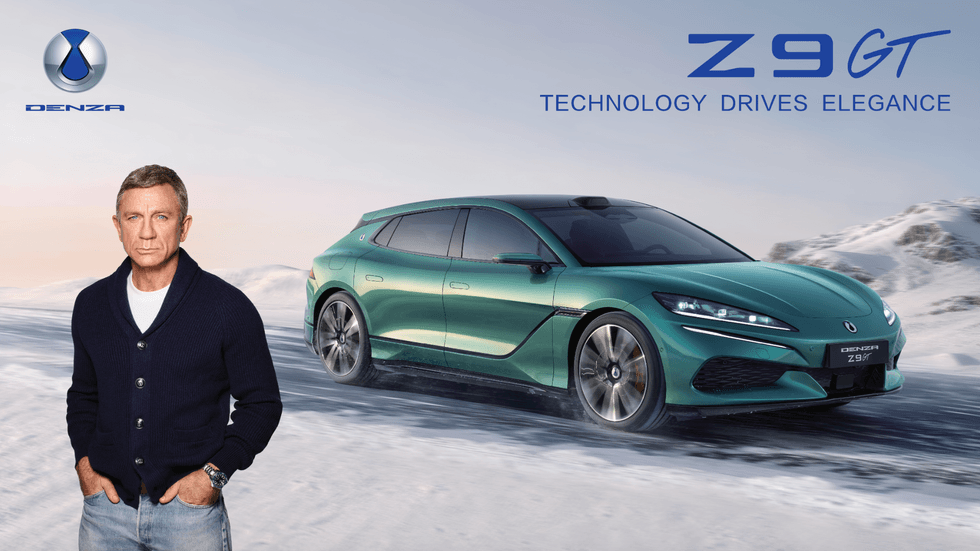
 Cue the 007 music, but maybe leave the Aston Martin in the garage? BYD
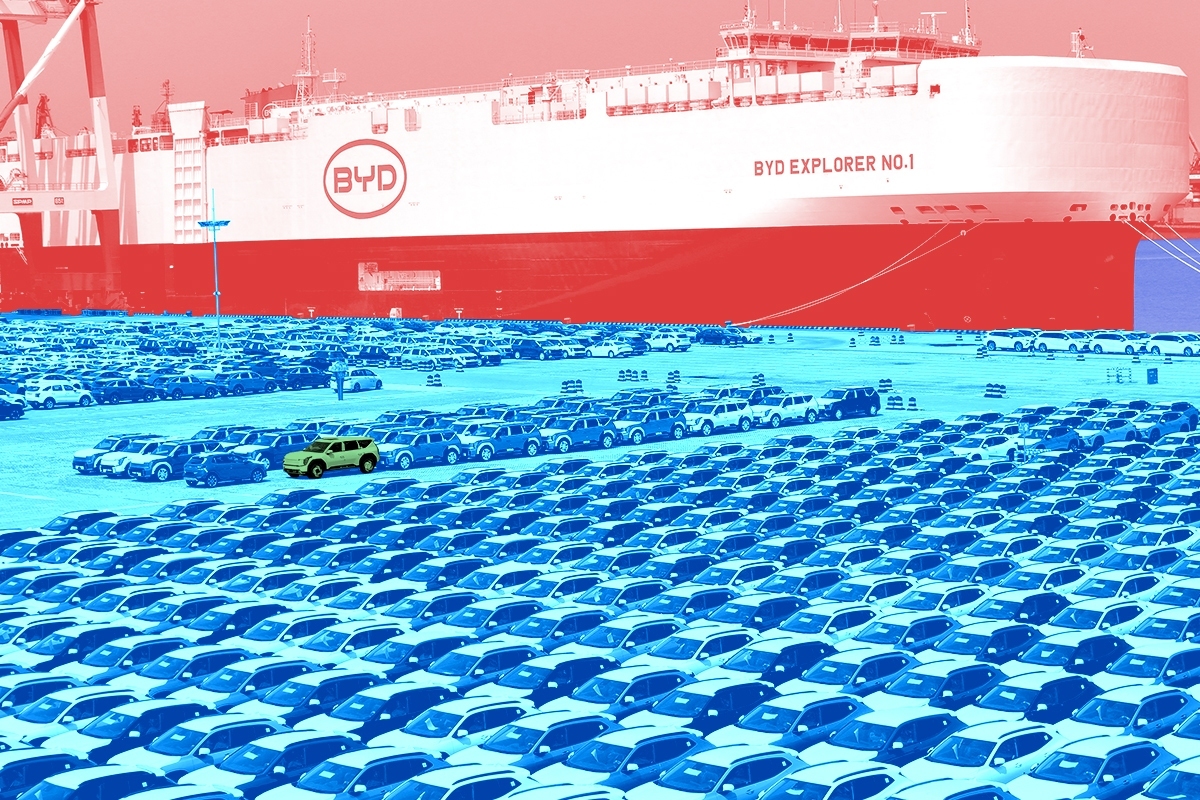
A week ago, I told you that Chinese automakers were wasting no time in setting up a Canadian beachhead in the North American vehicle market, with at least three companies on track to start selling cars by the end of this year. Now the largest of Beijing’s auto giants, BYD, has outlined plans for at least 20 dealerships in its first year in Canada. The company “is moving fast to establish a physical retail presence in Canada,” Electrek reported, and is already scouting out locations in the Toronto area. BYD has hired Dealer Solutions Mergers & Acquisitions, an Ontario-based automotive consultancy, to find dealership locations throughout the country. “They’ve asked us to help them find as many of the 20 that they possibly can, but they’re out there doing that themselves, as well,” Farid Ahmad, the consultancy’s chief executive, told The Global and Mail. BYD’s cutting-edge designs and low price tags are the result of China’ ability to “innovate so relentlessly because of its abundance of process knowledge,” Heatmap’s Robinson Meyer wrote last year, citing Dan Wang, a researcher at Yale Law School who studies Chinese technology. “This community of engineering practice may have been seeded by Apple’s iPhone-manufacturing effort in the aughts and Tesla’s carmaking prowess in the 2010s, but it has now taken on a life of its own.” BYD is also tapping good old-fashioned Hollywood starpower to promote its global rollout. On Wednesday, the company’s luxury brand, Denza, announced British actor Daniel Craig as the face of its new advertising campaign.
Ford, meanwhile, is sweating the competition as the iconic American automaker seeks to rebuild its electric vehicle line from the ground up. The first models designed through the company's new Model T-like approach are due out next year, InsideEVs reported this week.
2. U.S. electricity regulator says big tech isn’t engaged enough on power issues
The top U.S. electricity regulator criticized tech companies for not engaging federal authorities more on the buildout of artificial intelligence data centers. In remarks Axios reported from CERAWeek in Houston, Laura Swett, the chair of the Federal Energy Regulatory Commission, said she talks to utilities about surging data center demand “probably nine times as much” as she hears from hyperscalers. “I don’t talk to them as much as I thought that they would be coming to me,” she said. Axios reporter Amy Harder called the comments “unusually blunt, far more candid than a lot of other main stage conversations underway here at what’s considered the world’s most influential energy gathering.”
The backlash to data centers, a force Heatmap’s Jael Holzman wrote is “swallowing American politics,” is only growing. On Thursday, two U.S. senators, Democrat Elizabeth Warren and Republican Josh Hawley, sent a letter to the Energy Information Administration urging the agency to collect “comprehensive, annual energy-use disclosures” on data centers, according to a scoop from Wired reporter Molly Taft.
Get Heatmap AM directly in your inbox every morning:
3. Trump is taking a 20% stake in yet another mining company
The Trump administration is adding yet another mineral company to the federal government’s portfolio of equity stakes. On Wednesday, the U.S. International Development Finance Corporation announced a strategic investment in Australia’s Syrah Resources. The company’s facility in Louisiana is the first U.S. supplier of natural graphite, a key battery material. Syrah also controls the Balama mine in Mozambique, one of the world’s largest natural graphite reserves. The agency plans to convert a $31 million loan into equity, taking a roughly 20% stake in the company. Once complete, the deal will make the DFC the second-largest shareholder in the miner. “In today’s era of global competition, economic security is national security,” Ben Black, the DFC’s chief executive, said in a statement. “With this transaction, we will secure U.S. access to one of the largest graphite reserves in the world, supply jobs for the U.S. and our allies, and support a valuable hub of economic activity for the people of Mozambique.”
Sign up to receive Heatmap AM in your inbox every morning:
4. Two court rulings in one day chart a path on municipal climate policy
Two legal decisions that came down this week highlighted the limits of both municipalities’ right to sue over the effects of global warming and a key federal statute’s authority to stop the city government in Washington, D.C., from adopting greener building codes. On Tuesday, Maryland’s Supreme Court tossed out lawsuits filed against fossil fuel companies by Baltimore, Annapolis, and Anne Arundel County, ruling that the localities were stepping on federal jurisdiction in what Maryland Matters called a “scathing decision.”
Then came the second decision, coincidentally just over the border in the nation’s capital. On Thursday, Judge Ana Reyes of the U.S. District Court for the District of Columbia “roundly rejected” claims by trade associations representing the gas industry that the federal Energy Policy and Conservation Act prevented Washington from requiring in 2022 that new and renovated buildings be constructed to a net-zero energy standard by 2027, E&E News reported. The federal statute sets energy efficiency standards for appliances and bars state and local regulators from enacting rules that would alter a product’s design. But Reyes ruled that the EPCA, as it’s known, does not prevent local or state governments from tightening rules on energy consumption.
5. Japan cranks up the coal and Taiwan shells out $600 million for LNG
Two of East Asia’s biggest economies, Taiwan and Japan, grew increasingly dependent on shipments of liquified natural gas over the past decade as the former phased out nuclear power entirely and the latter paused its reactors in the wake of the Fukushima disaster. Now that gas tankers coming from one of the world’s top suppliers, Qatar, can’t traverse the Strait of Hormuz, the two Pacific archipelago nations are in a bind. Japan is racing to turn its nuclear reactors back on, as I have previously written. In the meantime, Tokyo has just lifted restrictions on the operation of coal-fired power plants in a bid to shore up the electricity supply, Nikkei reported. Taiwan, on the other hand, is stockpiling LNG and finding alternative vendors. On Wednesday, the Ministry of Economic Affairs said Taiwan had more than its legally-required 11 days of cushion if all shipments halted. The self-governing island, meanwhile, spent an extra $600 million to secure LNG through June to replace the lost Qatari supply, Bloomberg reporter Stephen Stapczynski noted on X. The prices were roughly twice as high as before the war.
THE KICKER
Norway made history last year with the first shipment to its debut carbon storage facility near the North Sea, as I wrote last summer. Now the country is taking another stride in carbon capture and storage with the launch of a new bioenergy project paired with CCS that Carbon Herald described as “the first permanent storage of biogenic carbon dioxide captured from biogas production.” While a mouthful, the distinction is notable. The facility just began transporting and storing liquified CO2 captured from a wastewater facility, injecting the carbon into geological formations roughly 8,500 feet into the North Sea’s seabed. When the wastewater treatment plant produces biogas as organic waste breaks down, carbon dioxide comes out as a byproduct. Instead of entering the atmosphere, “this stream is captured, purified, and prepared for transport.”


 Cue the 007 music, but maybe leave the Aston Martin in the garage? BYD