Current conditions: Unseasonable warmth in the Midwest and Northeast — temperatures are gloriously set to surpass 75 degrees Fahrenheit in New York City — threaten thunderstorms and heavy rain later in the week • Temperatures in Ahmedabad, the largest city in the northwestern Indian state of Gujarat, are nearing 100 degrees • South Africa’s Northern Cape is at “severe” risk of wildfires this week.
THE TOP FIVE
1. Trump renews his threats on Iran’s energy infrastructure
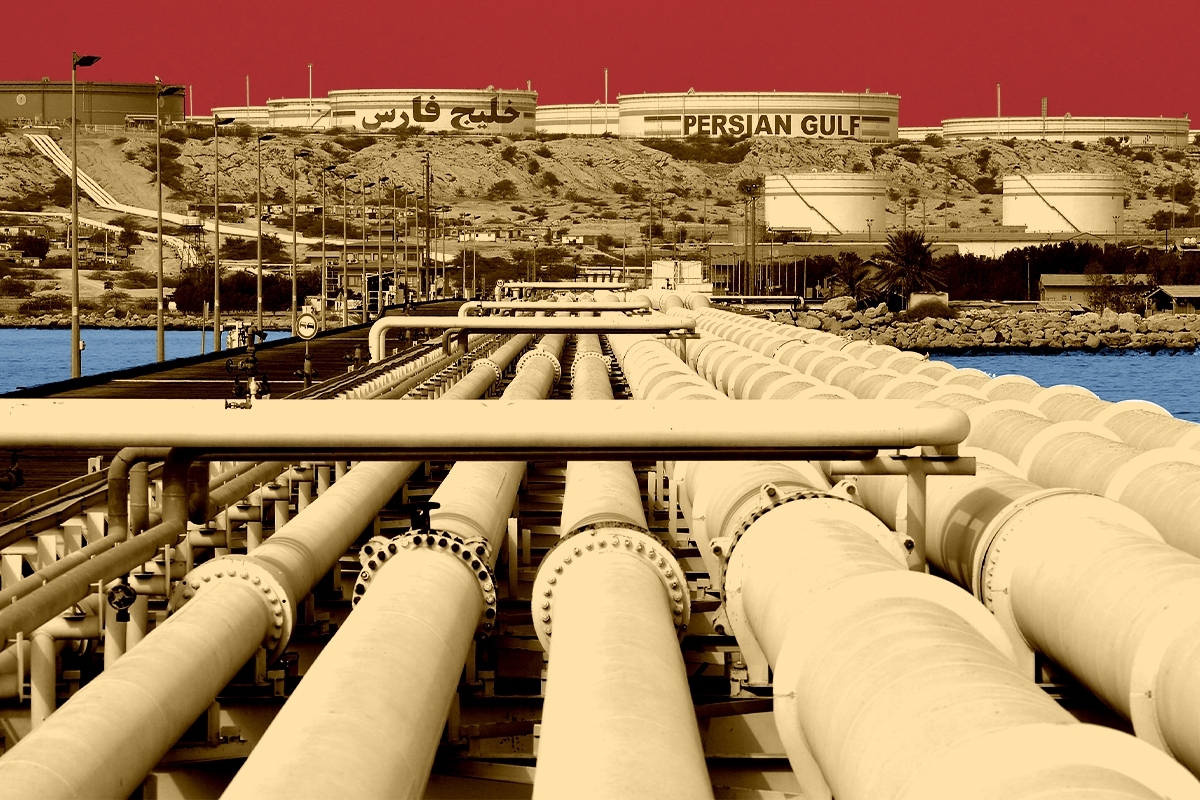
President Donald Trump’s on-again, off-again threat to attack critical energy infrastructure in Iran that could take years to recover is back on as of Monday. In a post on his Truth Social network, the president said his administration was “in serious discussions” with a new “more reasonable” regime to end the war, and that “great progress has been made.” But if Tehran didn’t reopen the Strait of Hormuz “immediately,” Trump said the U.S. would “conclude our lovely ‘stay’ in Iran by blowing up and completely obliterating all” power plants, drilling sites, and oil export facilities on Kharg Island. He said the U.S. may even target “all” Iran’s desalination plants, “which we have purposefully not yet ‘touched.’” Attacking “all” electric generating stations would seemingly include the Bushehr nuclear plant. The situation at Iran’s first and only atomic power plant, built and currently being expanded by the Russians, is deteriorating. Russia’s Foreign Ministry on Saturday told Reuters the U.S.-Israeli strikes that keep landing near the single-reactor facility merit “unequivocal and firm condemnation.” The Kremlin, as I wrote last month, is currently working on annexing Europe’s largest nuclear plant, which its troops occupied shortly after the invasion of Ukraine began.
Meanwhile, the Trump administration is delaying at least 30 wind farms — with a combined capacity to generate as much as 7.5 gigawatts of power — as the military sits on reviews that Axios said were “once considered routine.” Gasoline prices also crept past $4 per gallon, according to AAA, up from just below $3 before the war began.
2. Holtec prepares to restart Palisades reactor and begin work on building SMRs
Holtec International is about to complete its transition from the nuclear industry's undertaker — a manufacturer of casks to store radioactive waste and a decommissioner of defunct power stations — to the midwife of its rebirth. The company said Monday that it’s completed one of the last major steps in its process to bring the single reactor at the Palisades nuclear plant in Michigan that Holtec originally bought to decommission back online. The unit went offline in 2022, right when Holtec purchased the plant. Before significant demolition took place, the company struck a deal with the Department of Energy to finance the restoration of the facility instead. But that required significant renovations that the previous owner declined to perform. The latest step was “passivation,” a chemical process that removes surface iron and contaminants from stainless steel to keep it from corroding. To perform the process, the team at Palisades brought the reactor to its normal operating temperature and pressure for the first time since its permanent shutdown four years ago. The work restored the system’s protective surfaces following what Holtec called “extensive maintenance, inspection, and component upgrades completed over the past two years.” With that work complete, Holtec said in a press release that its system “will now be cooled and prepared for additional testing, equipment upgrades, and preparations for fuel loading.” At the same time, the company said it will now begin laying the groundwork to expand the facility with a pair of its in-house 300-megawatt small modular reactor, which I reported on for Heatmap in December.
Once Holtec builds its first SMR-300s in Michigan, the company said last year it plans to build a hub in Utah to train workers on how to construct and operate more of the reactors throughout the region. But Utah Governor Spencer Cox wants more than just reactors. On Friday, the Republican held a press conference announcing the state’s bid to host one of the Department of Energy’s proposed nuclear campuses that the agency said in its request for information should “support activities across the full nuclear fuel life cycle, including fuel fabrication, enrichment, reprocessing used fuel, and disposition of waste.” The federal deadline to apply to host a campus is tomorrow.
3. Italy postpones its coal phaseout by 12 years
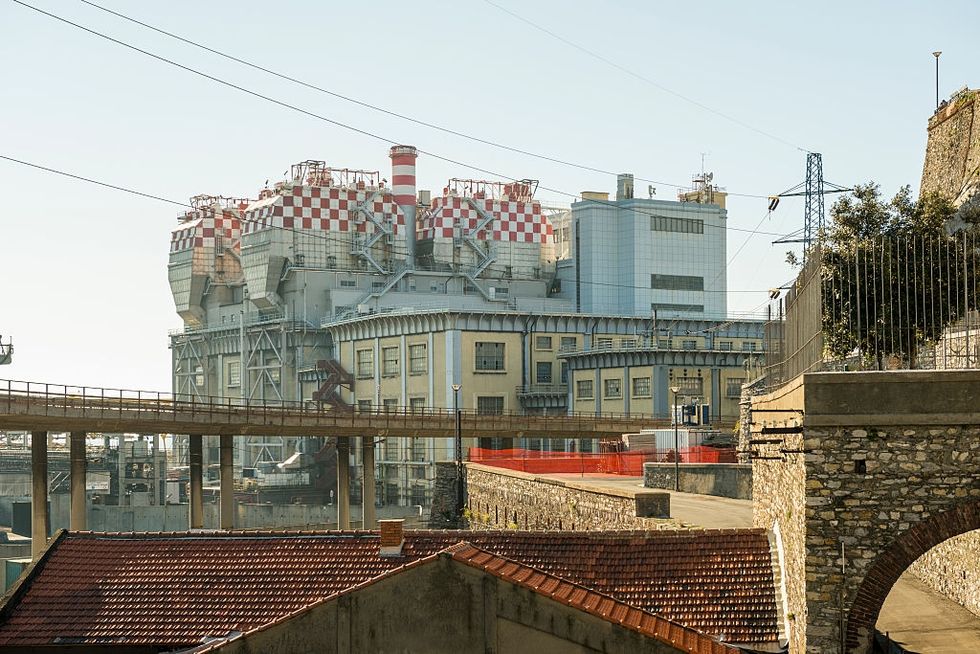
 A coal plant in Genoa. Mats Silvan/Getty Images
Italy depends on natural gas for 40% of electricity and heating, but relies on imports for nearly all that fuel. While the country managed to survive the 2022 energy shock that followed Russia’s invasion of Ukraine, the government of Giorgia Meloni isn’t taking any chances on losing access to its roughly half a dozen coal-fired power stations. A new bill debated Monday in the parliament would allow coal plants to keep operating until 2038, 13 years beyond the deadline set by the National Energy and Climate Plan, which called for a December 2025 shutdown. “All energy sources, at least in the immediate future, must be used to their fullest extent,” Tommaso Foti, the minister for European affairs and the so-called national recovery and resilience plan, told L’Unione Sarda, the oldest newspaper in Sardinia, which is home to two of Italy’s remaining coal plants.
That’s not to say green energy is getting the boot. Earlier this month, Bloomberg reported that the Meloni government had held talks with France and South Korea about building a nuclear power plant in Italy for the first time since the country phased out atomic energy 40 years ago. On Monday, the European Commission approved a roughly $6.9 billion aid package to support production of 200,000 metric tons per year of green hydrogen, according to Renewables Now.
Sign up to receive Heatmap AM in your inbox every morning:
4. Canada looks to save a copper smelter that threatened to close over regulations
Months after Glencore warned it may close Canada’s only and largest copper smelter over stricter pollution rules, the governments in Ottawa and the province of Quebec are racing to make a deal to keep the plant open. The Swiss miner and commodities trader paused plans to invest $718 million in its Quebec copper operations last month after talks with the province stalled over arsenic emission limits. Medical data indicates that residents living near the Rouyn-Noranda plant “have elevated rates of chronic obstructive pulmonary disease, and a class-action lawsuit over the smelter-related harm was certified last year,” according to Mining.com. Quebec proposed giving the company more time to meet stricter emissions targets, and discussed potentially delaying a new cap of 15 nanograms per cubic meter by years. The federal government in Ottawa, meanwhile, said it would consider a request for $108 million in aid to finance pollution-control upgrades. Copper demand worldwide is soaring, and — as I wrote last week — the next big mine expected to open in the U.S. expects to ship its ore abroad for smelting.
The move comes as Prime Minister Mark Carney looks to ease climate rules on its biggest fossil fuel-producing province. Despite that, the government is on the brink of missing a deadline for two key portions of the agreement struck with Alberta last fall, in which the province committed to beefing up its carbon pricing scheme and supporting large-scale carbon capture and storage development. That deadline is set to lapse April 1, CBC reported.
5. Chinese EVs are increasingly profitable
We know they’re cheap. We know they have all kinds of glitzy hi-tech features. And we know they’re taking the global automotive market by storm. Now we also know that Chinese electric vehicles are profitable. So far this year, three Chinese automakers — Stellantis-backed Leapmotor, Nio, and Xpeng — posted their first annual or quarterly profits, joining BYD, Xiaomi, and Li Auto in what InsideEVs called “a growing roster of Chinese makers of plug-in vehicles” that “are no longer in the red.” It’s a signal, the publication suggested, “of the global automotive power balance shifting East, where Chinese EV makers are maturing quickly while battling brutal competition and price wars on their home turf.” Chinese automakers are racing to open their first dealerships in Canada as Ottawa eases tariffs in response to the Trump administration’s aggression. As I wrote last week, BYD has already selected as many as 20 sites.
THE KICKER
The deadly heat dome that formed over the Pacific Northwest in 2021 may have actually left some plants and animals better off. Emphasis on some. In a study of about 50 species, researchers across Canada found that more than three quarters were negatively affected by the heat dome, while 25% saw a positive outcome. “During the heat dome in the places where it was cool, suddenly we have this warm air come in, and it's like putting the plants in a greenhouse for a couple of weeks, and so it boosted their productivity,” Sean Michaletz, an associate professor at the University of British Columbia’s department of botany, told Canada’s National Observer.
Editor’s note: This story has been updated to correct the status of Canada’s deal with Alberta over climate regulations.


 A coal plant in Genoa. Mats Silvan/Getty Images




 Seems significant. CGEP